
Talk to a local team
We ask what happened, where the damage is, and whether the source is still active.
Emergency restoration across Greater Tucson
When your home is wet, smoke-damaged, or showing signs of mold, you need a clear answer and a practical next step. Tucson Restoration Guard responds 24/7 for water extraction, structural drying, fire and smoke cleanup, odor removal, and mold remediation.
We ask what happened, where the damage is, and whether the source is still active.
We check affected materials, hidden moisture, contamination, and immediate safety needs.
Extraction, containment, drying, cleaning, or stabilization begins with the urgent work first.
We track conditions, explain changes, and prepare the affected area for the next step.
About Tucson Restoration Guard
Tucson Restoration Guard is a family-owned restoration business built around one simple idea: when something goes wrong inside a home, the owner deserves an honest explanation before the work begins.
For 31 years, our family has helped local homeowners, landlords, businesses, and property managers respond to water, fire, smoke, and mold damage. We have watched Tucson expand across the valley while older neighborhoods, desert homes, new subdivisions, and mountain communities have continued to present very different restoration challenges.
More than 600 customer reviews reflect the way we work: answer the phone, arrive prepared, protect the property, document what we find, and keep people updated. We are locally owned, locally loved, and based at 315 W. Valencia Rd—not routed through an out-of-state call center.
Local emergency restoration
Most damage does not arrive at a convenient time. A washing machine hose releases water before work. A monsoon pushes rain through a flat roof overnight. A water heater fails in a garage and reaches an adjoining room. Smoke from a kitchen fire settles through the house even though the flames were contained quickly. A slow bathroom leak stays hidden until the baseboard changes color or the room develops a musty smell.
These situations feel different, but the homeowner's questions are usually the same: Is the house safe? How far did the damage travel? What can be saved? What needs to happen today? How long will cleanup take? What should be documented for insurance? Tucson Restoration Guard answers those questions in a sensible order. We look for the source, establish the affected area, protect people and belongings, and explain the work without burying you in technical language.
Our office is at 315 W. Valencia Rd in Tucson. Being local matters because construction and weather conditions vary across the valley. Flat and low-slope roofs react differently to wind-driven rain than steep roofs in higher-elevation communities. Older block homes may conceal plumbing routes and wet furring strips. Newer stucco homes can trap moisture behind finishes. Manufactured homes, cabins, commercial suites, and custom foothills properties each need a drying or cleanup plan built around their materials.
We provide emergency water damage restoration, fire and smoke damage cleanup, and mold remediation for homeowners, landlords, property managers, businesses, and occupants throughout Greater Tucson. The purpose of this page is to help you understand the full service, not force you to call before you have basic answers. Read the section that matches your problem, review the locations we serve, and call when you are ready for direct help.
Water damage restoration
A wet floor is only the part you can see. Water can move under baseboards, behind cabinets, through wall cavities, and into insulation before a homeowner has time to grab a mop. In Tucson, the dry outdoor air can create a false sense that the house will dry on its own.
Materials inside a closed wall do not get that same airflow. If moisture stays trapped, drywall can soften, wood can swell, fasteners can rust, and mold can begin growing.
Our water damage work begins by stopping or isolating the source when it is safe to do so. We then inspect the affected rooms, measure moisture, remove standing water, and build a drying plan around the materials in your property.
A dishwasher leak on tile does not require the same approach as a monsoon roof leak above a wood-framed ceiling. We explain those differences before equipment is placed.
Homeowners often search for emergency water removal, flood cleanup, wet carpet drying, ceiling leak cleanup, or a water damage company near Tucson. Those phrases describe different moments in the same problem.
Our job is to connect them: remove the water, identify where it traveled, dry what can be saved, and document the condition of materials that cannot.
Explore all water damage restoration services →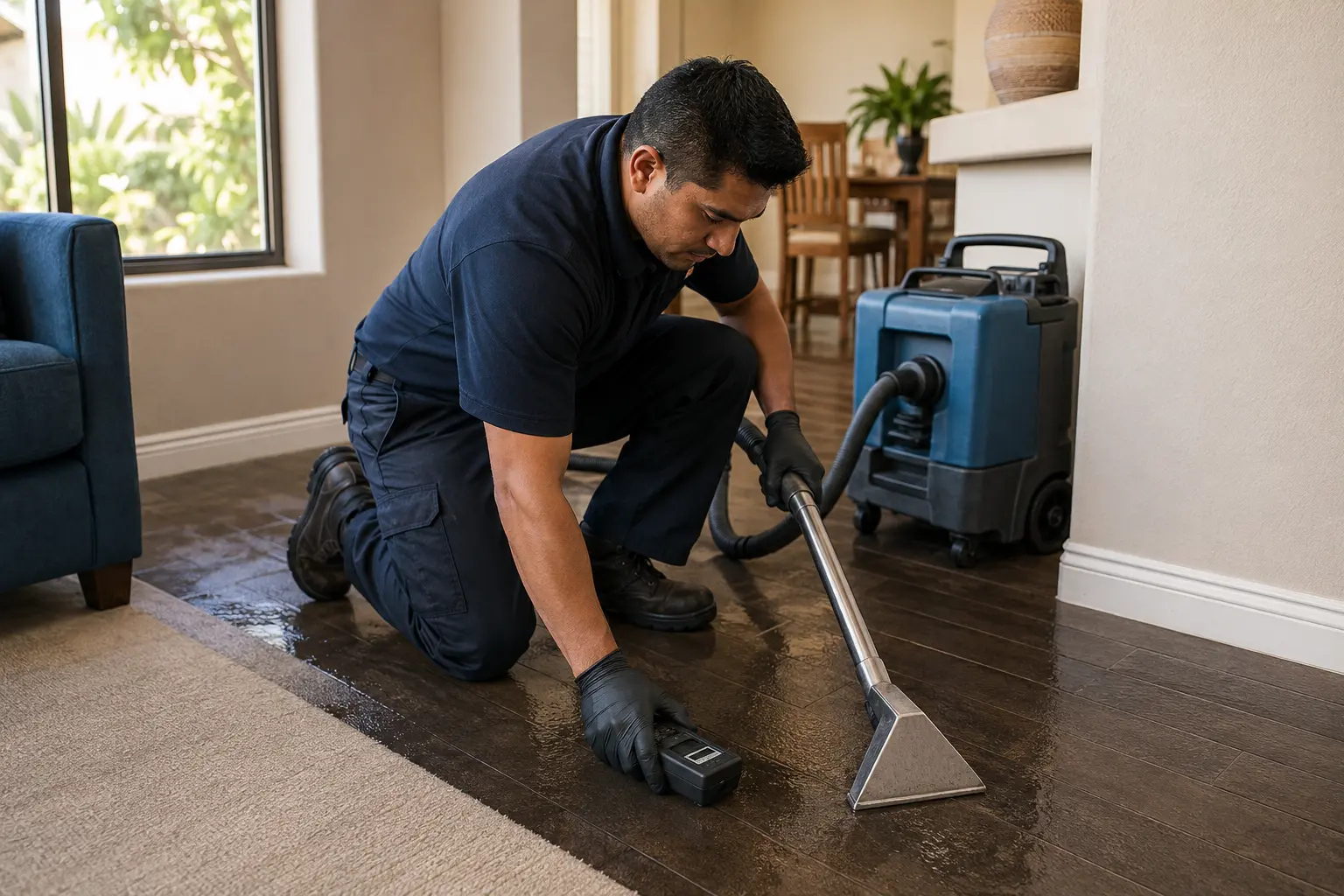
Pumps and commercial extraction equipment remove standing water from floors, carpets, and low areas. Fast extraction shortens the time building materials remain wet and makes controlled drying more effective. We look beyond the center of the room and check edges, closets, cabinets, and adjoining spaces where water may have migrated.
Service details →Air movers help moisture leave wet surfaces while dehumidifiers collect moisture from the air. Equipment type, placement, and runtime depend on the affected materials and indoor conditions. We monitor readings during the job so equipment is adjusted from evidence rather than left running without a clear drying target.
Service details →A thermal camera can reveal temperature patterns that suggest hidden moisture, missing insulation, or a possible leak path. It is a screening tool, not a magic X-ray, so we confirm findings with moisture meters and a physical inspection. This is especially useful around ceilings, exterior walls, plumbing chases, and rooms below roof penetrations.
Service details →Wood flooring can cup, crown, stain, or separate after water enters the boards or subfloor. When the water category and material condition allow, targeted drying systems may help remove moisture without immediate demolition. We compare readings across the floor and surrounding dry areas before discussing whether salvage is realistic.
Service details →A sewer backup or toilet overflow involving contaminated water needs more than extraction. The area must be isolated, unsalvageable porous materials removed, and remaining surfaces cleaned and treated using appropriate methods. People and pets should stay out of the affected rooms until safety conditions have been evaluated.
Service details →Although full basements are less common in Tucson than in many cities, lower rooms, sunken spaces, and crawl areas can collect stormwater or plumbing discharge. We pump out accessible water, examine the source and drainage path, and check framing, insulation, vapor barriers, and stored contents for additional damage.
Service details →Freezing weather is not Tucson's everyday concern, but exposed pipes around Mount Lemmon, Oracle, Catalina, and other cooler locations can still split. Supply lines also burst from age, pressure, corrosion, or failed fittings. We handle the resulting water cleanup and drying and coordinate the needed plumbing repair when the source must be corrected first.
Service details →Dishwashers, washing machines, refrigerator supply lines, water heaters, and air-conditioning drain systems can release water slowly or all at once. Because these leaks often begin behind an appliance, cabinets and flooring may be wet before anyone notices. We trace the affected path and separate cosmetic surface water from moisture inside the assembly.
Service details →Some clean-water losses can be handled by extracting and drying carpet in place. Other situations require pad removal, disengagement, or disposal because of contamination, delamination, odor, or prolonged exposure. We inspect the backing, pad, subfloor, tack strip, and perimeter so the recommendation is based on the whole floor system.
Service details →Furniture, clothing, electronics, photographs, and household belongings may need to be moved so the structure can be cleaned and dried. We organize and document items, separate affected contents, and arrange appropriate cleaning or specialty care. A planned pack-out protects belongings and keeps restoration work from becoming a second source of damage.
Service details →Fire and smoke damage restoration
A small fire can affect more of a property than the burned area. Heat carries smoke through open rooms, door gaps, return-air pathways, and wall penetrations.
Soot can settle on ceilings, cabinets, electronics, clothing, and surfaces far from the source. Water used to suppress the fire may create a second problem that needs immediate drying.
Fire cleanup is not ordinary housekeeping. Different residues react differently to water, agitation, heat, and cleaning products. Wiping soot with the wrong method can spread it or drive it farther into a finish.
Our process begins with safety, stabilization, and an inspection of affected materials. We then establish priorities for board-up, water removal, debris handling, residue cleaning, and odor treatment.
Homeowners often want one direct answer: will the smell go away? Odor improves when the source is removed and each affected material receives the right treatment.
Spraying fragrance over smoke does not solve the cause. We work from source removal toward detailed cleaning and deodorization, then reassess remaining odor rather than relying on one treatment for every fire loss.
Explore all fire and smoke damage restoration services →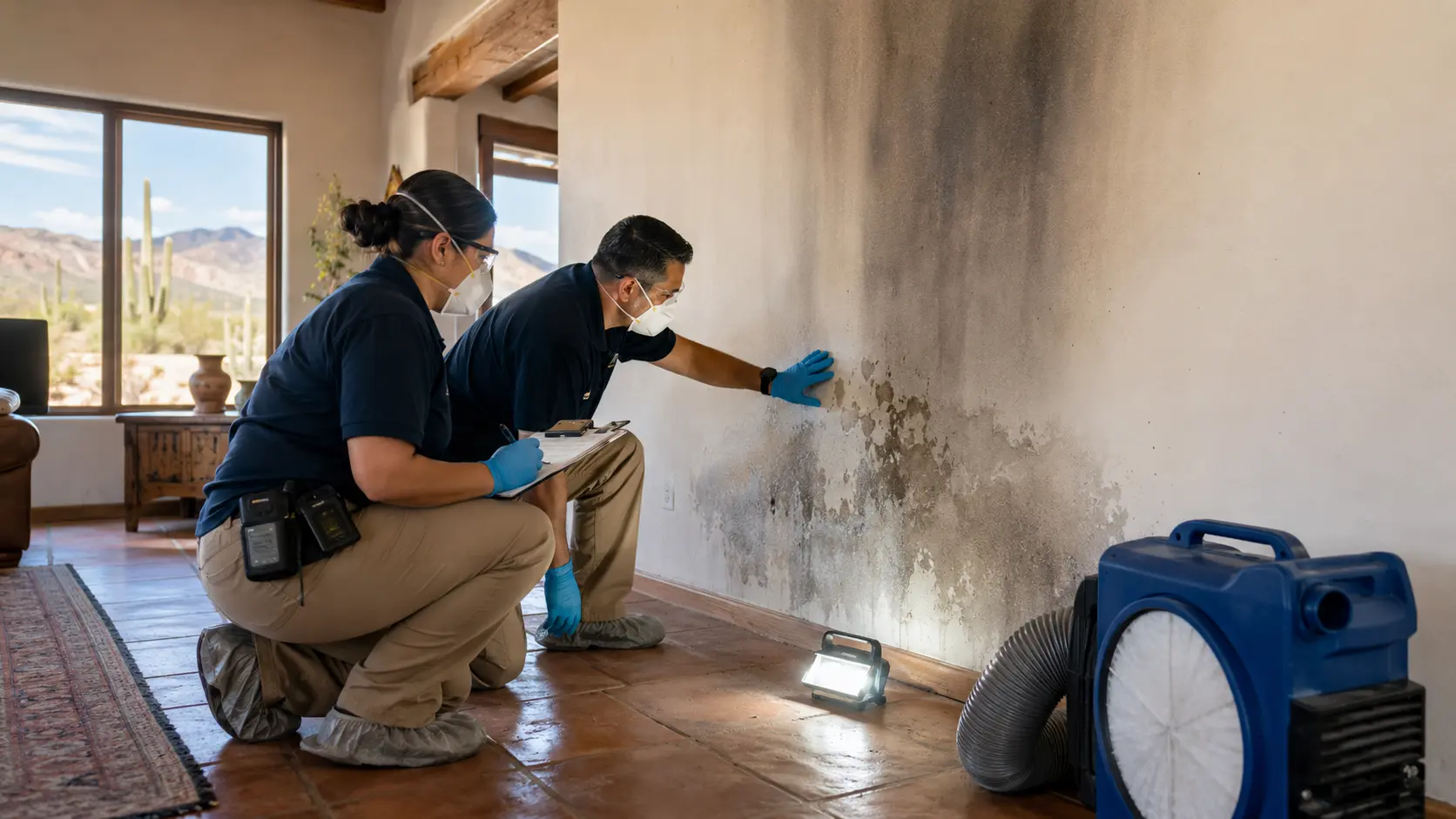
Broken windows, damaged doors, roof openings, and compromised exterior sections can leave a property exposed after a fire. Temporary board-up and tarping help reduce weather intrusion and unauthorized access. Stabilization is completed with attention to existing structural hazards and access needs for investigators, adjusters, and restoration crews.
Service details →We identify where residue settled and test cleaning methods before treating broad areas. Dry soot, oily smoke film, and protein residue do not respond the same way. Walls, ceilings, trim, glass, fixtures, and contents may each need a different sequence to remove residue without causing avoidable damage.
Service details →Thermal fogging creates a fine deodorizing mist that can reach small spaces where smoke particles traveled. It is used only after source removal and cleaning have progressed far enough to make odor treatment meaningful. Occupancy, ventilation, material compatibility, and safety precautions are reviewed before this treatment is considered.
Service details →Ozone may be appropriate for certain unoccupied spaces and contents after detailed cleaning. Because ozone is not safe for people, pets, or plants during treatment, the area must be controlled and aired out according to the plan. It is one option in odor restoration, not a substitute for removing burned material and soot.
Service details →Fire residues can contain acidic compounds that affect metal, electronics, plumbing fixtures, appliances, and decorative finishes. Time matters because corrosion may continue after the fire. We identify vulnerable surfaces, prioritize cleaning, and refer specialty electronics or valuable items to qualified recovery providers when ordinary surface cleaning is not suitable.
Service details →If the heating or cooling system operated during the incident, smoke particles may have entered returns, supply runs, filters, coils, and interior components. We inspect accessible areas and determine whether filter replacement, component cleaning, or duct decontamination is appropriate before the system circulates air through the building again.
Service details →Charred, unstable, contaminated, or unsalvageable materials may need controlled removal. Demolition is planned around structural safety, utility conditions, documentation, and the need to protect unaffected rooms. Debris is sorted and removed without dragging residue through clean areas of the property.
Service details →Important papers, photographs, books, artwork, and records can be sensitive to water, heat, soot, and handling. We separate and document affected pieces and connect suitable items with specialized drying, cleaning, or conservation methods. Quick decisions are important, but valuable or irreplaceable items should not be discarded without careful evaluation.
Service details →Curtains, bedding, clothing, rugs, and upholstered furniture can hold smoke odor long after hard surfaces look clean. Fabric type, dye stability, soot loading, and fire conditions determine the cleaning approach. We inventory affected textiles and arrange appropriate laundering, dry cleaning, ultrasonic cleaning, or specialty treatment when recovery is practical.
Service details →Fire suppression water can saturate drywall, insulation, carpet, wood, and contents. Drying often needs to begin while fire restoration planning is still underway. We extract water, establish moisture boundaries, and coordinate drying with debris removal so wet materials do not sit untreated while the smoke cleanup is being organized.
Service details →Mold remediation and abatement
Mold is a moisture problem before it is a cleaning problem. It may appear after a roof leak, plumbing leak, air-conditioning condensate issue, monsoon intrusion, or slow seepage around a shower or window. In Tucson, evaporative coolers and seasonal humidity can also create damp conditions in places that normally feel dry.
A dark mark does not tell us everything about what is happening behind the surface. The useful questions are where the moisture came from, whether it is still active, how far the affected area extends, and which materials can be cleaned.
We inspect the site and build the work area around those facts. Containment and air control help keep dust and spores from spreading while damaged materials are handled.
Bleach is not a universal mold remedy. Porous drywall, insulation, carpet pad, and particleboard can hold growth below the surface.
Painting over discoloration can trap a problem without correcting it. Proper remediation addresses the source, separates clean and affected areas, removes material when it cannot be reliably cleaned, and leaves the space ready for independent verification or rebuilding.
Explore all mold remediation and abatement services →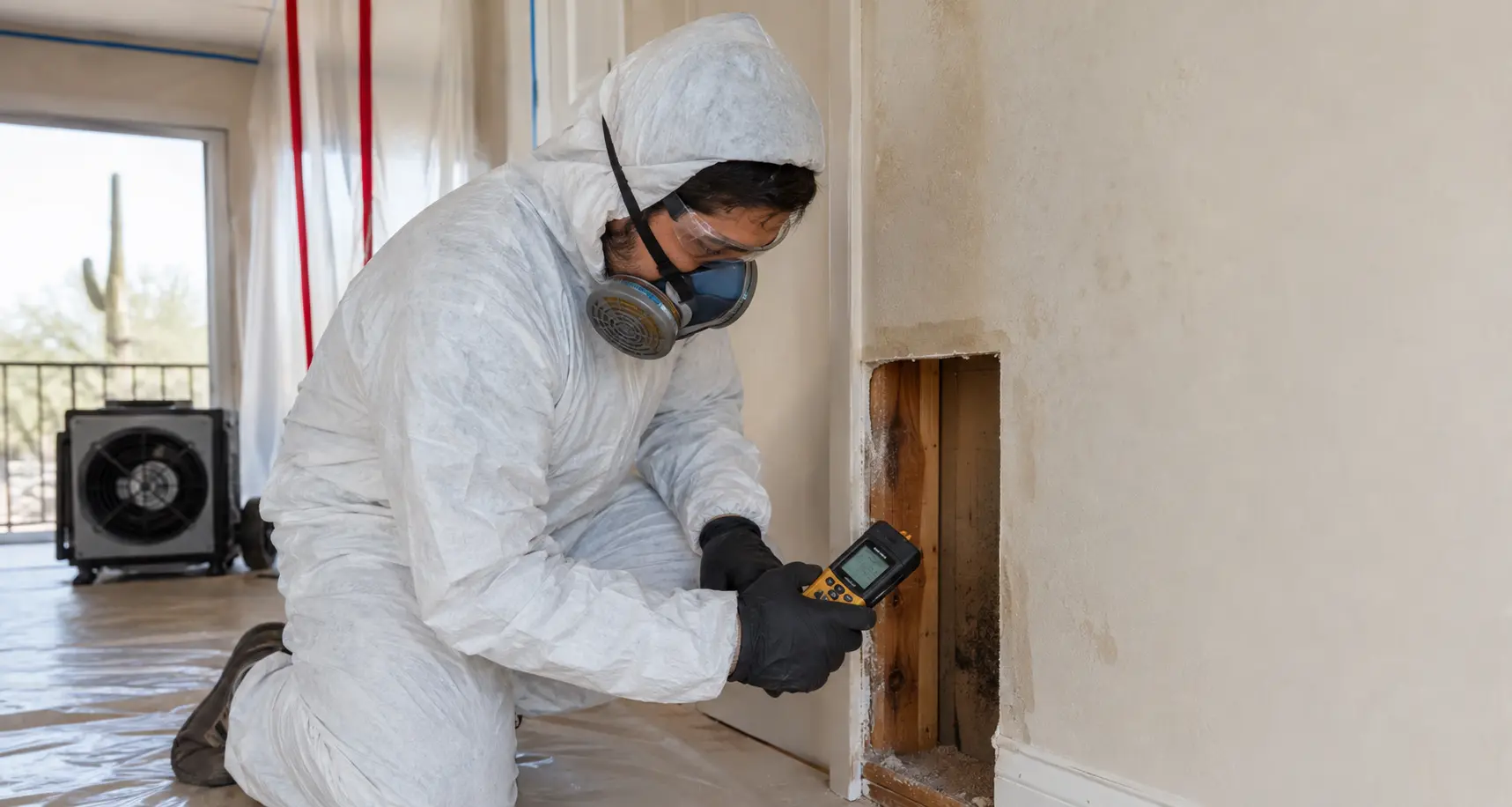
We look for active leaks, condensation, roof entry points, plumbing failures, drainage problems, and moisture moving from adjacent rooms. Meters and thermal imaging may support the inspection, but visible building conditions matter too. Remediation will not hold if the source remains active, so moisture correction is the first planning priority.
Service details →Plastic barriers, sealed openings, controlled entry points, and pressure management help separate the work zone from occupied or unaffected areas. The size and complexity of containment depend on the location, extent, and planned removal. We explain access limits so family members and workers know which areas must remain undisturbed.
Service details →HEPA-filtered air scrubbers capture small airborne particles generated during remediation. Equipment is sized and positioned for the work zone and may be used with negative air pressure where appropriate. Filters, ducting, and exhaust routes are managed so air movement supports containment instead of carrying debris into clean rooms.
Service details →After affected material and dust are removed, compatible hard or semi-porous surfaces may receive an antimicrobial treatment as part of the cleaning process. Product selection follows label directions and material limitations. Treatment supports detailed cleaning; it does not replace physical removal of contamination or correction of the moisture source.
Service details →Media blasting can remove surface growth or residue from certain wood, masonry, and structural materials when hand cleaning is inefficient. Soda and dry ice behave differently, so the substrate, cleanup needs, dust controls, and finish expectations must be considered. We use aggressive methods only when the material and project conditions justify them.
Service details →Drywall, insulation, carpet pad, ceiling tile, and other porous materials may need removal when mold has penetrated them or contamination cannot be reliably cleaned. Controlled removal reduces unnecessary demolition while giving access to hidden surfaces. Materials are bagged or wrapped before leaving containment to avoid spreading debris.
Service details →Growth near an air handler, coil, drain pan, supply, or return requires careful evaluation because the system can move particles through the property. We check accessible components and surrounding moisture conditions, replace affected filtration, and coordinate specialty duct or mechanical cleaning when the contamination extends into the system.
Service details →Some projects benefit from independent post-remediation verification. A qualified third party can inspect the completed work area and collect air or surface samples when testing is requested or required. Keeping verification independent helps separate the remediation work from the decision about whether the area meets the agreed clearance criteria.
Service details →After cleaning and drying, certain exposed structural materials may be coated with an appropriate encapsulant. This can help lock down residual staining or fibers and provide a clean surface before reconstruction. Encapsulation is considered only after the underlying material has been remediated; it should never be used to hide active growth.
Service details →Stored boxes, furniture, household goods, and washable belongings may collect dust or surface contamination. We separate items by material and condition, then use HEPA vacuuming, damp wiping, laundering, or specialty cleaning as appropriate. Unsalvageable belongings are documented so homeowners can make informed decisions about disposal and insurance records.
Service details →Emergency guidance
Your first goal is safety, not cleanup. Do not enter a room with standing water near outlets, appliances, electrical panels, or damaged wiring. Stay away from sagging ceilings and fire-damaged framing. Keep children and pets out of sewage, soot, and mold-affected areas. If there is active fire, a gas odor, downed power, or an immediate medical concern, call 911 or the appropriate utility before calling a restoration company.
If it is safe, shut off the water source at a fixture valve or the main shutoff. Do not climb onto a wet roof during a monsoon. Take wide photos and closer photos before moving items. Place dry furniture legs on foil or plastic only if you can do so without crossing contaminated water. Move unaffected small items from the edge of the wet area, but leave electronics, heavy furniture, and damaged building materials for evaluation.
Avoid applying bleach, household fragrance, or random cleaning products before a fire or mold inspection. Products can react with residue, change the appearance of the loss, and make some materials harder to restore. Do not turn on an HVAC system if smoke or visible mold may have entered it. Write down when you first noticed the problem, what fixtures were running, and any actions taken. That short timeline helps both the restoration inspection and your insurance conversation.
Completed restoration work
These project views use our current restoration photography to show the stages our crews manage. The left image shows the damaged or inspection stage; the right image shows active restoration progress.
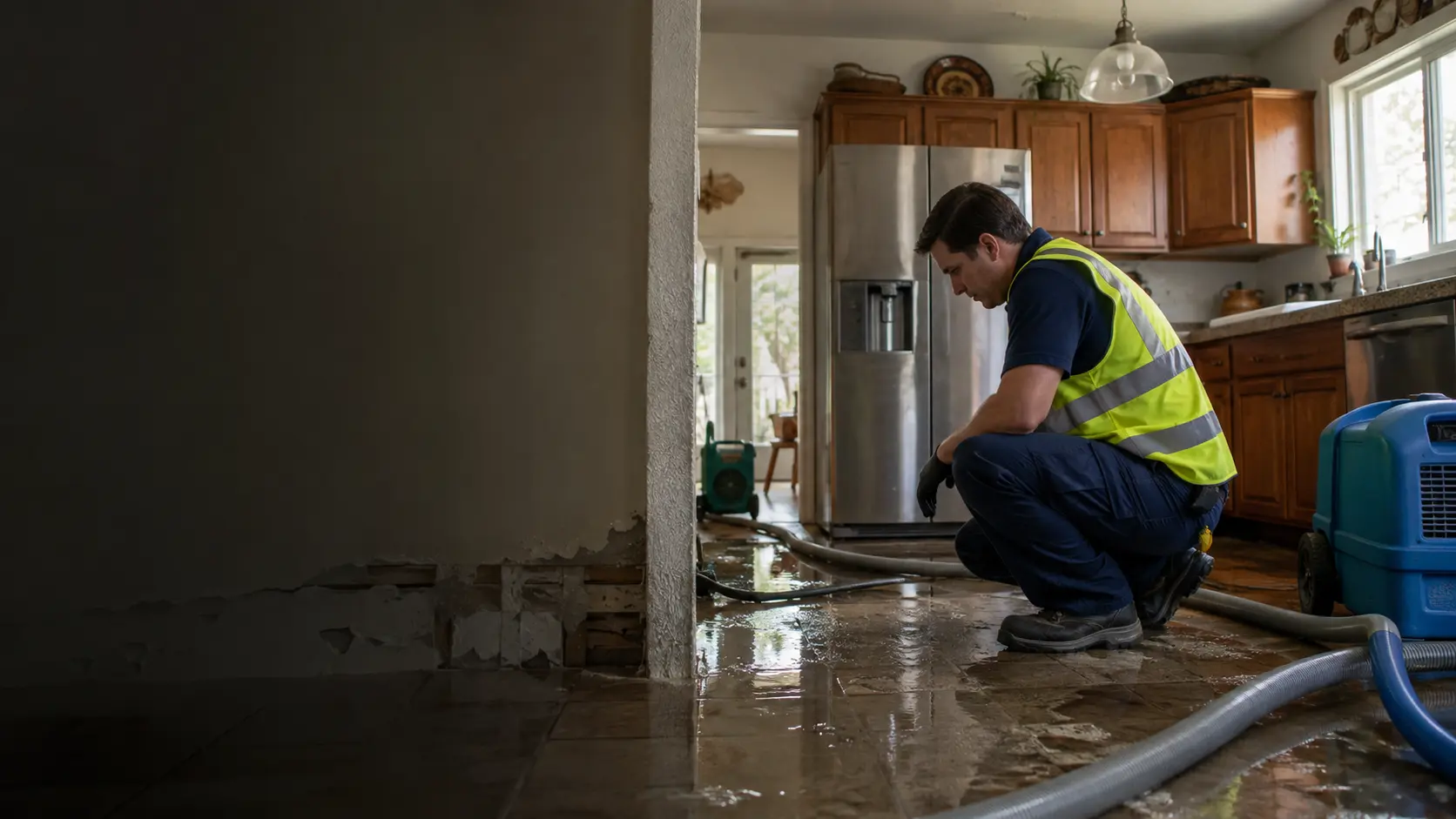
Standing water was extracted, flooring and cabinet edges were checked, and drying equipment was placed around the measured moisture boundary.
The work area was evaluated for soot, moisture, and material damage before cleaning, air filtration, and source-removal steps began.
The moisture source was traced, the work zone was controlled, and affected materials were handled without opening the rest of the home to demolition dust.
Project conditions and final results vary. True post-restoration photos can replace these progress views when additional completed-project images are available.
Tucson restoration history
Tucson's relationship with water, fire protection, and indoor cooling has changed for generations. Those changes still influence the homes we inspect today.
In the 1800s, community water managers called zanjeros maintained the zanjas, or irrigation ditches, that moved water through Southwestern settlements. Tucson's municipal water utility traces its expansion to 1900 and now operates across hundreds of square miles.
That long water history sits beside a modern homeowner problem: thousands of miles of pipes, hard water, aging fittings, and strong seasonal demand. A desert city may conserve water carefully and still experience serious indoor damage from one broken supply line.
City of Tucson water-history source →City records describe Tucson's volunteer fire service operating by the late 1890s. In 1902, Assistant Chief William Katzenstein became the department's first recorded line-of-duty death while responding to a store fire near Broadway and Meyer.
Modern alarms, sprinklers, fire-resistant assemblies, and professional response have changed safety dramatically. Yet older structures, additions, wood roofs, electrical updates, wildfire smoke, and mixed building materials still make post-fire cleaning a property-specific job.
City of Tucson fire-history source →University of Arizona historians note that Tucson residents used sleeping porches and wet sheets for evaporative cooling during the 1920s and 1930s, before mechanical air conditioning became common. Later, evaporative coolers and refrigerated air changed how homes were enclosed and cooled.
Today's tightly closed rooms, condensate drains, ductwork, roof penetrations, and cooling equipment create moisture paths that earlier homes did not have. Mold is not caused by Tucson's age or style, but understanding the building's cooling history can help locate the moisture source.
University of Arizona building-history source →Tucson property risks
Summer storms can deliver intense rain over a short period. Water may enter through roof penetrations, scuppers, parapet walls, skylights, windows, exterior doors, and drainage points that perform normally during lighter weather. Wind can drive rain upward or sideways into openings that do not leak during a calm storm. Once inside, water follows framing, electrical penetrations, and low points, so the visible ceiling stain may not sit directly below the entry point.
After the rain stops, roof surfaces may dry quickly in the sun while insulation and wall cavities remain damp. That is why an interior moisture map matters. Repairing the roof is necessary, but the indoor materials still need evaluation. Repeated seasonal leaks deserve special attention because older staining can hide a new wet area.
Air conditioners work hard during Tucson summers. Condensate drains, pans, coils, supply boots, and poorly insulated ducts can create water problems when they clog, leak, or sweat. A slow condensate issue may soak an attic platform or ceiling over many days. The strong temperature difference between cooled indoor air and hot humid monsoon air can also contribute to condensation around ducts and vents.
High heat changes how a building dries. Simply opening windows is not always helpful because outdoor monsoon humidity, dust, and heat can make indoor conditions worse. Controlled airflow and dehumidification allow the drying environment to be measured. Equipment must also be placed so circuits are not overloaded and occupied areas remain usable where possible.
Many Tucson homes combine masonry walls, framed additions, stucco exteriors, and low-slope roofs. Water can travel along the interface between old and new construction. Stucco cracks, roof coating failures, window flashing, and parapet details may admit water slowly. Block can appear dry at the surface while adjacent furring, insulation, and drywall remain wet.
Remodeling can add another layer of complexity. New flooring installed over old tile, enclosed patios, relocated plumbing, and cabinets built over previous finishes create hidden spaces. Our inspection follows the actual assembly instead of assuming every home was built exactly like the plan.
Mineral buildup and aging components can contribute to appliance and plumbing failures. Flexible supply lines, angle stops, toilet connections, refrigerator lines, washing machine hoses, and water heaters deserve regular inspection. A pinhole leak may stay hidden inside a cabinet or wall until swelling, staining, odor, or higher water use becomes noticeable.
When plumbing water is clean at the source, prompt action may preserve more material. The water category can change after it contacts dirty surfaces or sits for an extended time. Waiting for a weekday appointment can turn a straightforward extraction into a larger drying and demolition project.
Green Valley, SaddleBrooke, Oro Valley, and other communities include seasonal or frequently vacant properties. Damage can continue for hours or days before anyone enters the home. A monitored water shutoff, leak sensor, reliable local contact, and routine property checks can reduce that risk. When delayed damage is found, we inspect for microbial growth, odor, cabinet damage, flooring movement, and moisture that spread beyond the original room.
Homes and businesses
Material assemblies, occupancy, operating hours, and access all influence the work. We adjust containment, equipment, documentation, and communication to the property in front of us.
We protect unaffected rooms, explain equipment noise and access, consider children and pets, and discuss where occupants can safely remain. Kitchens, baths, laundry rooms, roofs, and water heaters are common loss areas.
Water and smoke can cross units through ceilings, shared walls, and plumbing chases. We coordinate access and documentation with owners, residents, and managers while keeping the immediate safety and drying needs clear.
Business interruption matters. We plan work zones, safe paths, after-hours access, equipment placement, and documentation around the operation. Offices, shops, restaurants, and service facilities each have different priorities.
Floor assemblies, underbelly material, insulation, limited crawl access, and lightweight finishes require a careful inspection. Water can travel below the visible floor and remain trapped if the enclosure is not checked.
Original finishes, adobe or masonry elements, custom cabinetry, art, and unusual materials deserve conservative testing before broad cleaning or removal. We identify specialty items early and involve appropriate resources.
Distance, roads, wells, septic systems, propane, winter temperatures, outbuildings, and wildfire exposure can affect the response plan. We confirm safe access and available utilities before dispatch.
All service locations
Every community below is included in our service area. Choose the damage type for a dedicated local page with area-specific problems, landmarks, service details, and FAQs.
Older masonry homes, flat roofs, and dense blocks can turn a small roof or plumbing leak into hidden wall moisture. We provide water, smoke, and mold restoration throughout South Tucson.
From established ranch homes to remodeled properties near Oracle Road, we handle supply-line leaks, wet flooring, smoke residue, and moisture concerns in Casas Adobes.
Hillside drainage, roof details, large windows, and custom finishes deserve careful inspection. Our crews serve Catalina Foothills homes with discreet water, fire, and mold cleanup.
Monsoon runoff and longer plumbing routes can affect newer and rural properties around Tortolita. We respond with extraction, structural drying, fire cleanup, and mold containment.
Larger lots, washes, wells, septic systems, and additions create varied restoration needs. We serve Tanque Verde properties after storm intrusion, plumbing failures, fire, or mold.
We help Oro Valley homeowners with appliance leaks, water heater failures, roof intrusion, smoke cleanup, and moisture discovered behind cabinets or flooring.
Manufactured and site-built homes require material-specific drying decisions. We provide practical water removal, odor treatment, and mold remediation across Tucson Estates.
Fast-growing Marana includes new subdivisions, older homes, and rural properties. We respond to slab leaks, appliance failures, storm damage, smoke residue, and mold concerns.
Vail homeowners call us for monsoon roof leaks, broken supply lines, wet carpet, garage fires, smoke odor, and mold linked to plumbing or cooling systems.
From planned communities to larger desert properties, we provide Sahuarita water extraction, fire and smoke cleanup, and controlled mold remediation.
Wind-driven rain and plumbing failures can spread through walls and flooring before they are noticed. We serve Corona de Tucson with complete moisture tracking and cleanup.
Seasonal residences need clear communication and documentation when damage occurs while an owner is away. We handle water, smoke, and mold restoration in Green Valley.
Catalina properties can face roof leaks, septic backups, pipe failures, and wildfire smoke. Our restoration team serves homes along the Oracle Road corridor.
Older plumbing, evaporative coolers, roof wear, and compact lots are common sources of damage around Flowing Wells. We provide responsive local cleanup.
We serve Drexel Heights homes after plumbing leaks, stormwater entry, appliance failures, smoke damage, and mold growth in walls, cabinets, and flooring.
Homes west of Tucson may be farther from central services, but damage still needs a fast plan. We provide extraction, drying, smoke cleanup, and mold remediation in Valencia West.
Summit-area homes and businesses can face storm runoff, roof intrusion, plumbing failures, and smoke contamination. Our Valencia Road base keeps help close to this area.
Located near our office, Littletown receives local help for emergency water removal, sewage cleanup, fire residue cleaning, deodorization, and mold containment.
Rural access, wells, septic systems, and monsoon runoff shape restoration work in Picture Rocks. We inspect the source and build a practical property-specific plan.
Avra Valley properties may include workshops, outbuildings, manufactured homes, and long utility runs. We provide water, fire, smoke, and mold cleanup across the area.
We help SaddleBrooke owners address water heater failures, appliance leaks, wet flooring, smoke odor, and moisture concerns with clear updates and careful site protection.
Cooler weather, snow, steep access, cabins, and wildfire exposure create distinct risks on Mount Lemmon. Service depends on safe road and property access.
Oracle's elevation and winter temperatures can contribute to frozen or split pipes, while summer storms bring roof and runoff issues. We provide restoration help throughout the community.
Red Rock homeowners can call for water extraction, structural drying, fire and smoke cleanup, and mold remediation. Dispatch timing is confirmed based on crew and road conditions.
We serve San Manuel homes after pipe leaks, storm intrusion, appliance failures, smoke damage, and mold. Each visit begins with a clear inspection of the affected materials.
Rural homes near Three Points may face delayed leak discovery, septic backups, roof damage, and stormwater entry. We provide organized cleanup and drying plans.
Documentation and insurance
Insurance questions often begin before the full damage is known. Take reasonable photos, keep damaged items unless they create a safety concern, and save receipts related to emergency protection. When we inspect, we can document affected rooms, visible conditions, moisture readings, equipment placement, cleaning steps, and materials removed.
Your insurance carrier decides whether a loss is covered, what limits apply, and which costs are approved. A restoration company should not guarantee coverage or tell you to open a claim without understanding your policy and deductible. We can provide a clear work record and answer technical questions about the restoration scope. You remain free to communicate directly with your insurer and choose the contractor you trust.
Homeowner questions
These answers cover the questions we hear after monsoon leaks, pipe failures, fires, sewage backups, and mold discoveries. The condition at your property will determine the final recommendation.
If water is near electrical equipment, a sagging ceiling, sewage, or another immediate hazard, stay out of the area. Shut off the water only when you can reach the valve safely. Move small dry belongings away from the edge, take a few photos, and call for an inspection. Avoid using a household vacuum on standing water.
Emergency calls are answered day and night. Actual arrival time depends on the address, weather, road access, and active call volume. During a major monsoon event, we prioritize safety and active water sources. We give you a realistic dispatch update rather than promising a time we cannot meet.
It helps exposed surfaces, but it does not guarantee that wall cavities, insulation, cabinets, subfloors, or layered flooring are dry. Air-conditioning can also change indoor humidity. Moisture readings are the reliable way to compare affected materials with normal dry areas of the same property.
Sometimes. The answer depends on water contamination, length of exposure, paint or wall covering, insulation, swelling, sagging, and access for drying. Clean water that is addressed quickly may allow limited drying. Sewage exposure, crumbling gypsum, or trapped contaminated insulation usually changes the recommendation.
We document affected rooms, readings, photos, equipment, and work performed so you can share organized information with your carrier. Coverage and claim decisions belong to your insurer. We do not promise that a policy will pay, but we can explain the restoration scope in terms your adjuster can review.
A small isolated surface spot caused by a corrected moisture issue may be manageable for some homeowners. Widespread growth, recurring growth, sewage-related contamination, HVAC involvement, or health concerns deserves professional evaluation. Disturbing hidden mold without containment can spread dust into other rooms.
Testing is not required in every situation when visible growth and a clear moisture source are present. It can be useful when the source is uncertain, occupants have specific concerns, or a written protocol is needed. When post-remediation verification is requested, independent testing helps keep the clearance decision separate from the remediation work.
Many water losses require several days, but no honest company can give an exact duration without inspecting the materials and monitoring progress. Dense wood, layered flooring, cabinets, insulation, and limited access can extend drying. We use readings to decide when equipment can be removed rather than relying on a fixed calendar.
Often, but the result depends on the fire source, temperature, residue type, duration, and materials exposed. Source removal and detailed cleaning come first. Sealers, fogging, hydroxyl, or ozone treatments may support the plan. Heavy charring or deeply penetrated porous material may still require removal.
No one should remain in a treatment area during ozone use, including pets and plants. The space needs controlled treatment and ventilation before re-entry. Ozone is not appropriate for every property or material, so we consider other cleaning and odor-control methods before recommending it.
We first determine what needs to move for safe access and cleaning. Some items can be protected in place. Others may be moved to a clean room or packed out, photographed, inventoried, cleaned, dried, or referred for specialty care. We discuss disposal before removing belongings unless an immediate safety condition prevents delay.
Yes. Sewage cleanup requires controlled access, protective equipment, removal of affected porous materials, detailed cleaning, and decontamination. Do not walk through sewage and then enter clean rooms. Keep children and pets away, avoid running affected plumbing fixtures, and call a qualified plumber if the drain system is still backing up.
In some clean-water situations, yes. Success depends on wood type, finish, installation, subfloor, exposure time, and degree of movement. We measure multiple points and may use targeted floor drying. Severely buckled, contaminated, delaminated, or long-saturated flooring may not be a good salvage candidate.
Many projects allow occupants to stay in unaffected rooms. Sewage, major fire residue, structural hazards, extensive demolition, strong treatment processes, or occupants with special health concerns may require temporary relocation. We identify work zones and explain access restrictions before the project proceeds.
We serve Tucson and the listed surrounding communities from South Tucson and Flowing Wells to Oro Valley, Marana, Vail, Sahuarita, Green Valley, Catalina, SaddleBrooke, Mount Lemmon, Oracle, San Manuel, Three Points, Red Rock, and other named service areas shown on this page.
Available 24 hours
Call Tucson Restoration Guard for emergency water removal, fire and smoke cleanup, or mold remediation anywhere in our listed service area.
Tucson service base
315 W. Valencia Rd, Tucson, AZ 85706